
2 December 2024
For Immediate Release
The National Association of Community Broadcasters (NACB) welcomes the Broadcasting Services Amendment Bill as a step in the right direction toward strengthening Zimbabwe’s broadcasting sector. We commend the government for its responsiveness to key advocacy points raised by the community broadcasting sector. These measures reflect an encouraging spirit of collaboration, and we urge the continuation of this inclusive approach to policy making. As advocates for community broadcasters particularly community radios, we recognize and commend the Bill’s progressive elements, but also note critical gaps that require attention to ensure the legislation fulfils its intended purpose of empowering broadcasters to grow, deliver on their mandate, and achieve sustainability. We note and recommend the following:
- Role of BAZ: The Bill appropriately redefines the Broadcasting Authority of Zimbabwe (BAZ) as a regulator that manages the sector to facilitate sustainability rather than controlling the sector. This shift is critical for creating an enabling environment for broadcasters to thrive without undue control and overregulation.
- Licensing Framework: The introduction of annual licensing provides predictability and efficiency, ensuring timely licensing and operationalization of community broadcasters who are ready but would otherwise be affected by procedural bottlenecks. The transferability of licenses secures community ownership and enables continuity if the initial licensee becomes incapacitated or decides to close operations. It also enhances growth by allowing new players to come in and enhance station operations. Additionally, the bill introduces license convergence and simplifies the process by focusing on the type of broadcasting rather than the platform, eliminating the need for multiple licenses for multi-platform content.
However,NACB calls for the complete waiver of annual license fees and frequency fees for community broadcasters, recognizing their role as not-for-profit, community-driven broadcasters.
- Language Inclusion: Requiring all licensees to broadcast in all languages spoken in their license area, with at least 10% of the content in languages other than English, Shona, and Ndebele, promotes linguistic inclusivity. This will bolster the language promotion and cultural diversity aspect which community radios have already been advancing as other forms of licensees will also have to broadcast in indigenous languages.
- Broadcasting Fund: Ensuring the Broadcasting Fund is directed at supporting community broadcasters is a vital measure, recognizing their role as not-for-profit entities serving the public good. This will help address financial sustainability challenges that have long hindered the growth of CRs.
However, the missing element, which is a matter of equity and further enhancing sustainability is that the Act must mandate the Zimbabwe Broadcasting Corporation (ZBC) to share revenue from listener license fees with community broadcasters by allocating a minimal percentage of listener license fee revenue to the Broadcasting Fund for onward transfer to community broadcasters. Like ZBC, community broadcasters provide public service broadcasting, albeit at the community level, and deserve a share of these resources to sustain their operations. This will also potentially increase compliance by listeners as they understand that by paying their license fees, they also support their community broadcaster.
- Strengthening Community Rootedness: The Bill enhances accountability and community ownership by mandating, rather than merely encouraging, community participation in the governance, operations, and content of community broadcasters. This provision will deepen community ownership and participation of the community broadcasters.
- Government’s Weekly Broadcast Hour: Provisions for the government’s mandatory weekly hour of broadcasting must include clarity in terms of how this gets to be claimed and who has the authority to claim or allocate it to the different government departments. It must also be clear that it is about explaining the policies of the government, not any other type of content by government departments like adverts, etc. It is also important to include provisions to ensure it is cumulative only within the calendar year and does not spill over to the following year, or that must be used up by the first quarter of the following year. All this will protect broadcasters from exploitation by government departments who want free services at community broadcasters.
- Terminology for Non-Profit Making: When referring to the character of community radios, it is important to replace “non-profit making” with “not-for-profit.” Community radios must be encouraged to generate surplus income, though that should not be their primary interest. Surplus revenue is critical for reinvestment into their operations, ensuring growth, building reserves, enhancing sustainability, and financial resilience.
On a related note, NACB calls for the urgent licensing of more community radio stations and community televisions to promote access to information and give a voice to underserved communities.
About NACB
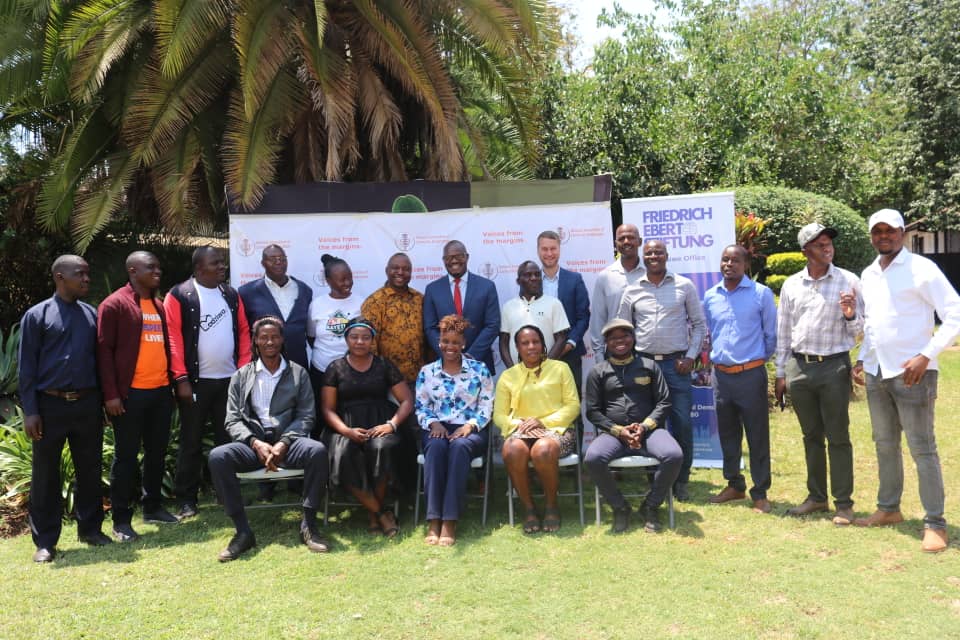
NACB is a collective of 14 licensed community radio stations in Zimbabwe. Representing a rich diversity of local communities, community radios present a platform for “voices from the margins” to be heard. We coordinate community broadcasters, unify their voice, and represent their collective interests while facilitating collaboration, peer learning, peer accountability, and information exchange. Our commitment is to promote community broadcasting as a viable tool for communication, access to information, the inclusion of marginalized voices, public participation, and development.
Issued by:
National Association of Community Broadcasters (NACB)
For Inquiries:
Email: info.nacb263@gmail.com
Phone: +263776791772
 nacb-zim.org